
Protein Purification Reagents and Kits


Cytiva™ HiTrap™ Capto™ Adhere ImpRes
The HiTrap™ Capto™ Adhere ImpRes is a ready-to-use column pre-packed with BioProcess Capto adhere ImpRes strong anion exchange multimodal resin for screening and small-scale protein purifications using ion exchange chromatography (IEX).

Cytiva Capto S™ ImpAct Chromatography Media
Capto S ImpAct is a strong cation exchange chromatography medium (resin) developed for polishing of monoclonal antibodies (MAbs) and other biomolecules.

Thermo Scientific™ Pierce™ Magnetic RNA-Protein Pull-Down Kit

Utilize a streamlined, robust method to enrich protein-RNA interactions using end-labeled RNA as the bait with Thermo Scientific™ Pierce Magnetic RNA-Protein Pull-Down Kit.

Thermo Scientific™ HisPur™ Ni-NTA Spin Purification Kit, 1 mL
Purify His-tagged recombinant fusion proteins using high-capacity nickel-NTA (nitrilotriacetic acid) metal-chelate beads, spin columns and plates.
MilliporeSigma™ Novagen™ S-protein Agarose
Retains specifically S·Tag™ fusion proteins.
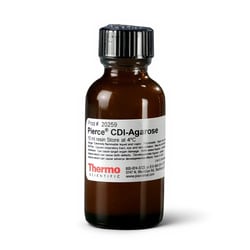
Thermo Scientific™ Pierce™ CDI-activated Agarose Resin
Covalently immobilize N-nucleophiles and primary amine ligands in aqueous or organic solvent conditions using carbonyldiimidazole-activated resin.

Cytiva HiScreen™ Sepharose™ Prepacked High Performance HIC Columns
Designed for method optimization and parameter screening

Cytiva HiScreen™ Capto™ S, Capto™ Q and Capto™ DEAE Prepacked IEX Columns
Designed for method optimization and parameter screening

Cytiva HiScreen Capto™ Core 700 Columns
Capto Core 700 is designed for intermediate purification and polishing of viruses and other large biomolecules.

Cytiva HiPrep™ HIC FF 16/10 Columns
Produce fast, preparative separation of proteins and other biomolecules. Cytiva Life Sciences™ HiPrep™ HIC FF 16/10 Columns are high capacity with excellent flow properties, and reliable, reproducible separations.

Thermo Scientific™ MabCaptureC Affinity Matrix

Thermo Scientific™ MabCaptureC Affinity Matrix is an agarose-based, high-binding-capacity Protein A chromatography resin with a rProtein A ligand produced in yeast.

Cytiva GSTrap™ HP Columns
Use to provide high-resolution, one-step purifications of glutathione S-Transferase (GST) tagged proteins. Cytiva Life Sciences™ GSTrap™ HP Columns are prepacked with Glutathione Sepharose™ High Performance medium.

Thermo Scientific™ CaptureSelect™ Transferrin Affinity Matrix
This is one of a group of Thermo Scientific™ CaptureSelect™ protein purification affinity resins developed for the simple, single-step purification of a variety human plasma and serum proteins.

Cytiva HisTrap™ FF Columns: 5 x 5mL
Optimize purifications of histidine-tagged proteins directly from homogenized, unclarified cells HisTrap™ FF Columns: 5 x 5mL are prepacked with precharged Ni Sepharose™ 6 Fast Flow media.

Cytiva SOURCE™ Tricorn™ Columns for IEX
Source 15Q 4.6/100 PE is a strong anion exchanger prepacked in a Tricorn column for intermediate lab-scale purification and large-scale polishing of biomolecules with ion exchange chromatography.